
What Young Workers Need, and What We Must Teach
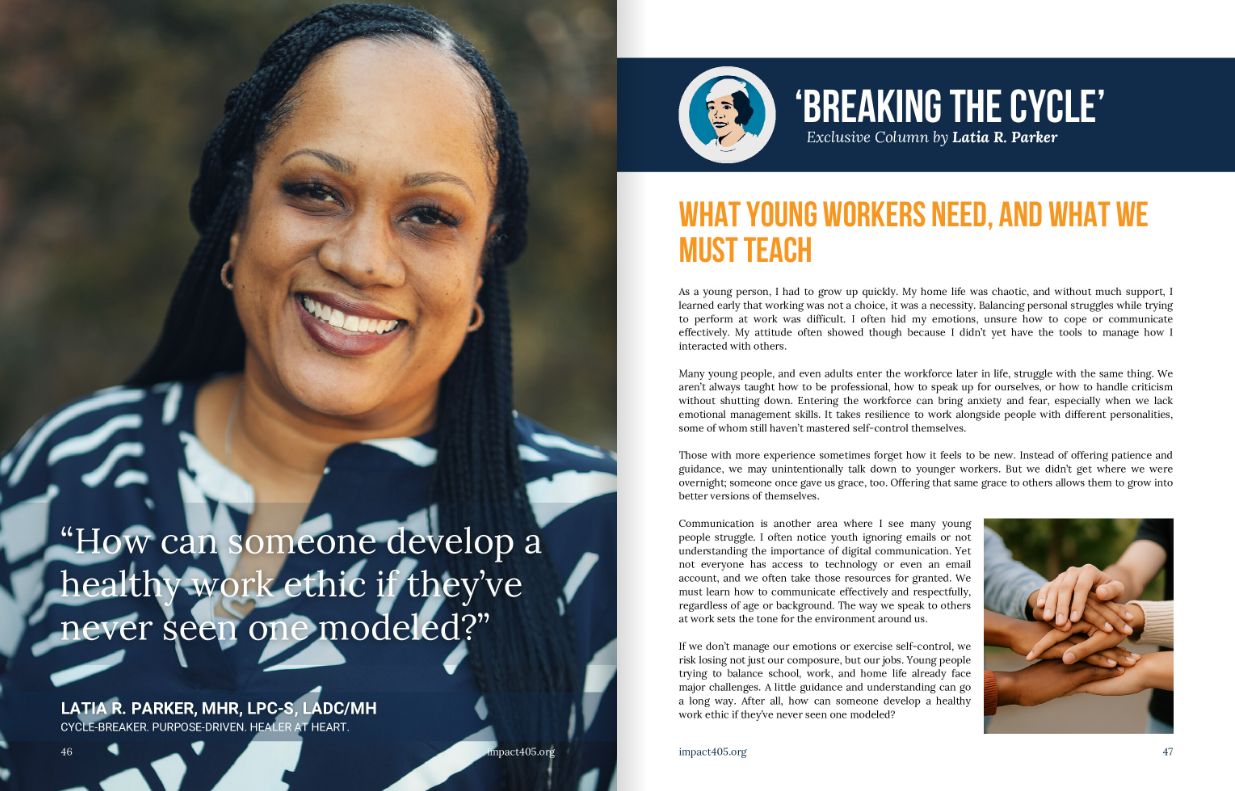
“How can someone develop a healthy work ethic if they’ve never seen one modeled”
As a young person, I had to grow up quickly. My home life was chaotic, and without much support, I learned early that working was not a choice, it was a necessity. Balancing personal struggles while trying to perform at work was difficult. I often hid my emotions, unsure how to cope or communicate effectively. My attitude often showed though because I didn't yet have the tools to manage how I interacted with others.
Many young people, and even adults enter the workforce later in life, struggle with the same thing. We aren't always taught how to be professional, how to speak up for ourselves, or how to handle criticism without shutting down. Entering the workforce can bring anxiety and fear, especially when we lack emotional management skills. It takes resilience to work alongside people with different personalities, some of whom still haven't mastered self-control themselves.
Those with more experience sometimes forget how it feels to be new. Instead of offering patience and guidance, we may unintentionally talk down to younger workers. But we didn't get where we were overnight; someone once gave us grace, too. Offering that same grace to others allows them to grow into better versions of themselves.
Communication is another area where I see many young people struggle. I often notice youth ignoring emails or not understanding the importance of digital communication. Yet not everyone has access to technology or even an email account, and we often take those resources for granted. We must learn how to communicate effectively and respectfully, regardless of age or background. The way we speak to others at work sets the tone for the environment around us.
If we don't manage our emotions or exercise self-control, we risk losing not just our composure, but our jobs. Young people trying to balance school, work, and home life already face major challenges. A little guidance and understanding can go a long way. After all, how can someone develop a healthy work ethic if they've never seen one modeled?
I've also noticed that both younger and older workers sometimes fear addressing issues with supervisors or human resources. They shut down instead of advocating for themselves. That's why teaching healthy communication is essential. It's not just a workplace skill; it's a life skill. It helps us grow, express our needs, and navigate challenges more effectively.
Time management is another critical part of success. If we fail to prioritize, we fall behind. Success requires determination, structure, and discipline, no matter where we come from or what we've been through.
When I began working for the courts, I faced racial challenges that tested my strength. I didn't develop tough skin overnight. It came through experience. I encountered many kinds of people, both positive and negative, and each taught me something valuable. What frustrated me most was seeing young workers disrespected simply because of their age.
Older coworkers sometimes tried to "parent" them or speak down to them, which created tension and mistrust. Poor boundaries and condescending behavior only make communication more difficult.
We must do better. Let's be mindful of our words and actions, especially when guiding the next generation. Let's use our experience to teach, mentor, and equip youth with the tools they need to thrive. Not just in the workplace, but in life.

405 Magazine, a city and lifestyle publication for central Oklahoma, aims to enrich the lives of Oklahomans by providing relevant content that informs, entertains, and intrigues readers. The magazine's impact stems from its focus on local people, places, events, dining, and culture, fostering enthusiasm for the metropolitan area. Through its award-winning team of writers, photographers, editors, and designers, 405 Magazine strives to create content that resonates with longtime residents, newcomers, and visitors.